1. Производ је готовview
The Waveshare RP2040-Zero is a compact, high-performance microcontroller unit (MCU) board designed around the Raspberry Pi RP2040 chip. This board is ideal for a wide range of embedded applications, offering a powerful dual-core Arm Cortex M0+ processor with flexible clock speeds up to 133 MHz. It integrates 264KB of SRAM and 2MB of on-board Flash memory, providing ample resources for complex projects. Its castellated module design allows for direct soldering onto carrier boards, making it suitable for SMD applications. The inclusion of a modern USB-C connector enhances ease of use and connectivity.

Слика 1: Предња страна view of the Waveshare RP2040-Zero Microcontroller Board.
2. Кључне карактеристике
- RP2040 Microcontroller Chip: Designed by Raspberry Pi, featuring a dual-core Arm Cortex M0+ processor.
- Flexible Clock Speed: Operates up to 133 MHz.
- Меморија: Equipped with 264KB of SRAM and 2MB of on-board Flash memory.
- УСБ-Ц конектор: Modern and reversible connector for power and data.
- Castellated Module: Enables direct soldering to custom carrier boards for integrated designs.
- УСБ 1.1 подршка: Includes both device and host capabilities.
- Режими напајања: Supports low-power sleep and dormant modes for energy efficiency.
- Програмирање: Features drag-and-drop programming via mass storage over USB.
- ГПИО пинови: 29 multi-function GPIO pins (20 via edge pinout, others via solder points).
- Периферни уређаји: 2 × SPI, 2 × I2C, 2 × UART, 4 × 12-bit ADC, 16 × controllable PWM channels.
- Унутрашње компоненте: Accurate clock and timer on-chip, temperature sensor, accelerated floating-point libraries.
- PIO State Machines: 8 × Programmable I/O (PIO) state machines for custom peripheral support.
3. Подешавање
3.1 Физичка веза
To begin using your Waveshare RP2040-Zero, connect it to your computer using a standard USB-C cable. The board will typically appear as a mass storage device, allowing for easy firmware upload. Ensure the cable is securely connected to both the board's USB-C port and your computer's USB port.

Figure 2: The RP2040-Zero board, showing the USB-C port for connection.
3.2 Pinout Diagram
Understanding the pinout is crucial for connecting external components and utilizing the board's full capabilities. The RP2040-Zero provides various GPIO pins, power pins (5V, 3V3, GND), and dedicated peripheral pins (SPI, I2C, UART, ADC, PWM). Refer to the diagram below for a detailed layout.
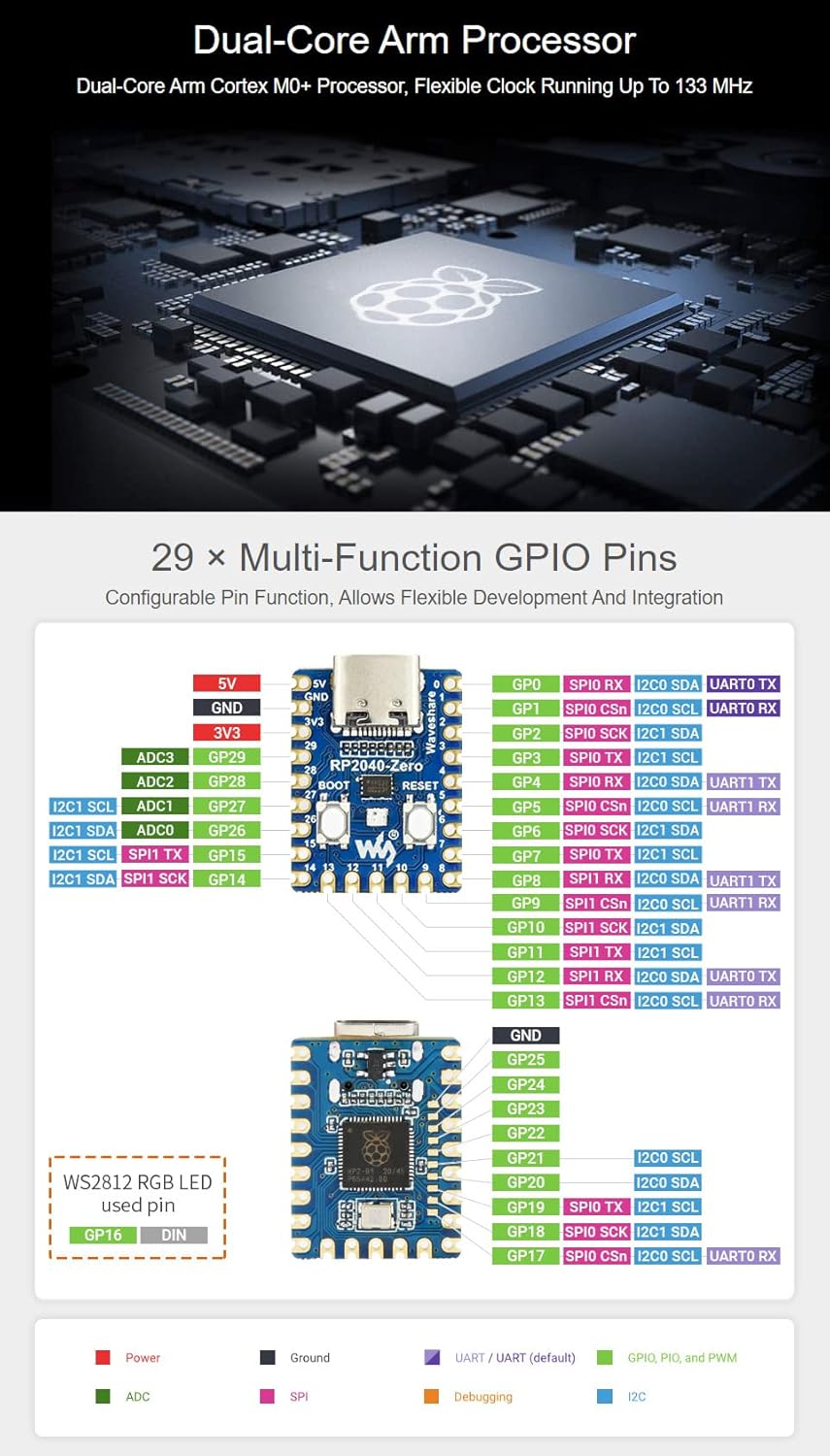
Figure 3: Detailed pinout diagram for the Waveshare RP2040-Zero, indicating multi-function GPIOs and power connections.
3.3 Programming Environment
The RP2040-Zero supports multiple programming environments, offering flexibility for developers:
- Pico C/C++ SDK: The official C SDK from Raspberry Pi, suitable for command-line development or integration with IDEs like Visual Studio Code and Eclipse.
- МикроПајтон: A full implementation of the Python 3 programming language optimized for embedded hardware like the Raspberry Pi Pico.
- Ардуино ИДЕ: Compatibility with the Arduino IDE allows for familiar development using Arduino sketches.
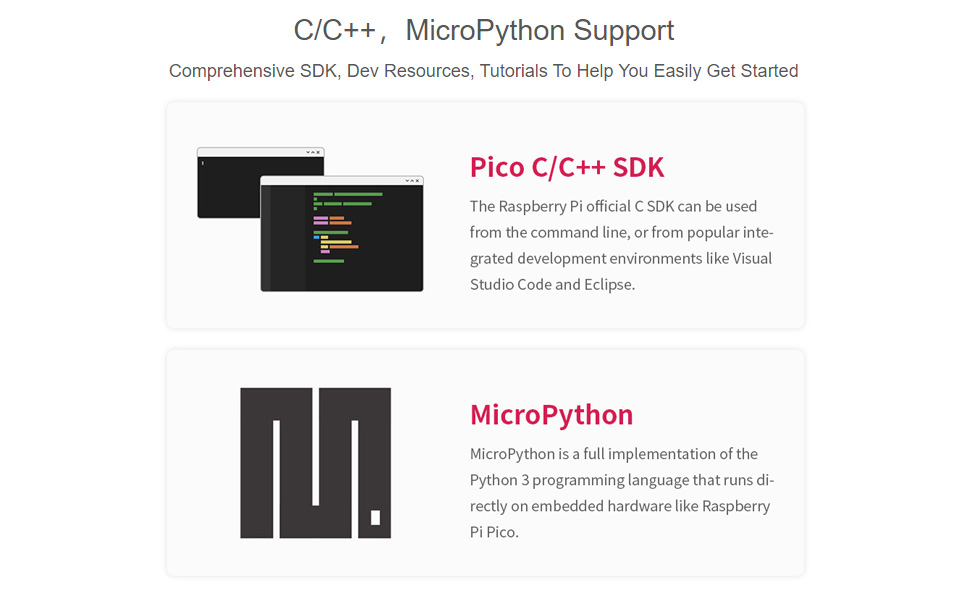
Figure 4: Illustration of C/C++ SDK and MicroPython support for the RP2040-Zero.
For a visual introduction to the RP2040-Tiny (a similar board from Waveshare), including its features and programming capabilities, please watch the video below:
Видео 1: Крајview of the RP2040 Tiny Kit, demonstrating its features and programming support.
4. Операција
4.1 Boot and Reset Buttons
The RP2040-Zero features two tactile buttons: BOOT and RESET. These buttons are essential for controlling the board's state and uploading new firmware.
- Дугме за покретање система: Press and hold this button while connecting the USB-C cable to enter USB mass storage mode, which allows you to drag-and-drop firmware files onto the board.
- Ресет: Press this button to restart the microcontroller. This is useful after uploading new code or if the board becomes unresponsive.
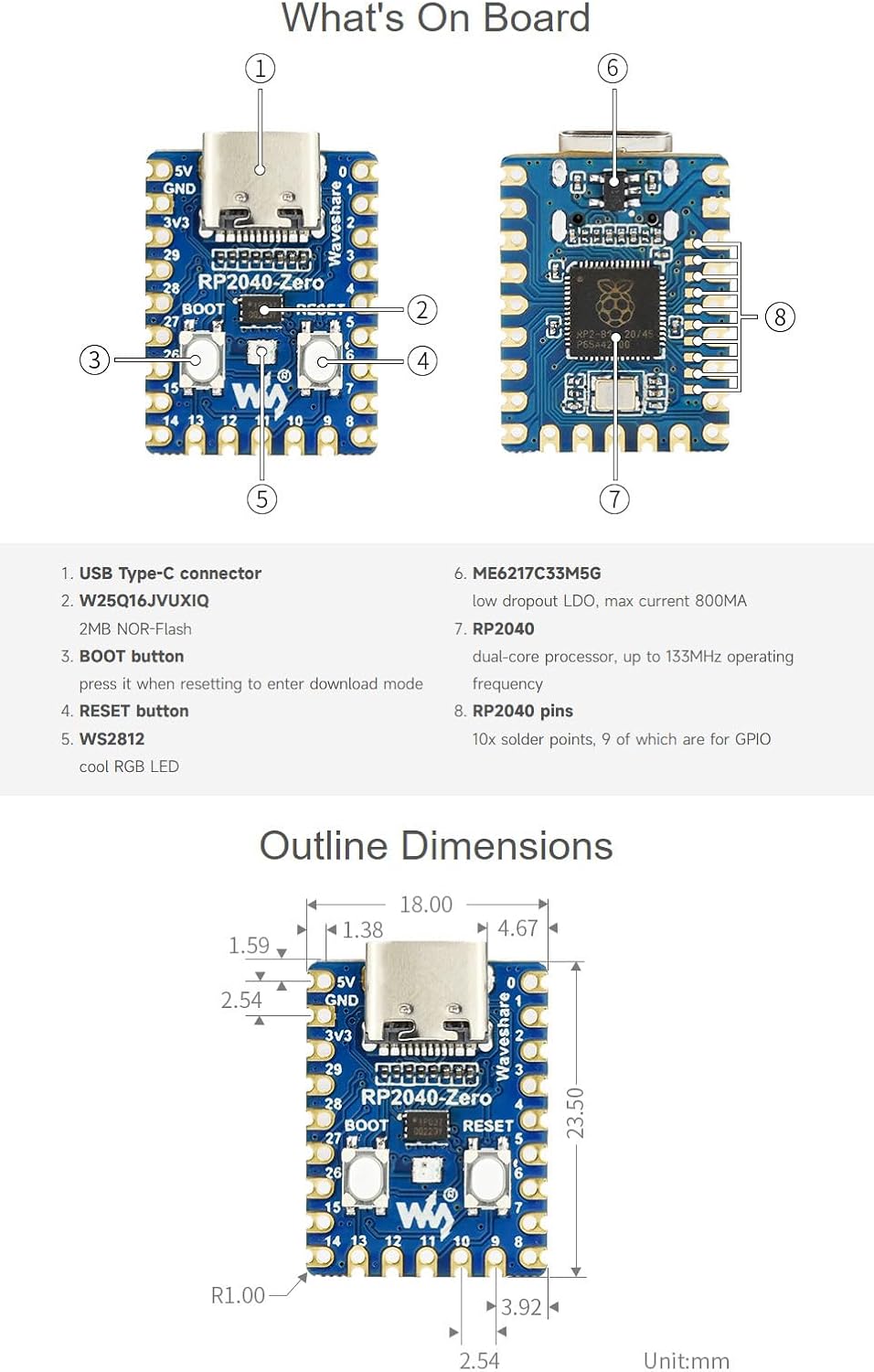
Figure 5: Labeled components of the RP2040-Zero board, highlighting the BOOT and RESET buttons.
4.2 Drag-and-Drop Programming
One of the most user-friendly features of the RP2040-Zero is its drag-and-drop programming capability. When the board is in bootloader mode (by holding the BOOT button during connection), it appears as a removable drive on your computer. You can then simply drag and drop a compiled firmware file (.uf2 format) onto this drive. The board will automatically flash the new firmware and reboot.
5. Одржавање
To ensure the longevity and optimal performance of your Waveshare RP2040-Zero, follow these general maintenance guidelines:
- Пажљиво рукујте: Избегавајте испуштање даске или њено прекомерно физичко оптерећење.
- Заштита од статичког електрицитета: Always handle the board in an anti-static environment or use appropriate grounding measures to prevent electrostatic discharge (ESD) damage.
- Одржавајте суво: Protect the board from moisture and liquids, which can cause short circuits and corrosion.
- чистоћа: Држите плочу чистом од прашине и остатака. По потреби користите меку, суву четку или компримовани ваздух за чишћење.
- Правилно складиштење: When not in use, store the board in its original packaging or an anti-static bag in a cool, dry place.
КСНУМКС. Решавање проблема
If you encounter issues with your RP2040-Zero, consider the following troubleshooting steps:
- Рачунар не препознаје плочу:
- Ensure the USB-C cable is fully inserted and functional. Try a different cable or USB port.
- Verify the board is in bootloader mode (hold BOOT button while connecting USB).
- Check if necessary drivers are installed for your operating system (though often not required for RP2040).
- Грешка при отпремању фирмвера:
- Потврдите фирмвер file is in the correct .uf2 format.
- Ensure the board is in bootloader mode before dragging the file.
- Check for sufficient free space on the board's flash memory (if applicable for your specific firmware).
- Code Not Running as Expected:
- Double-check your code for syntax errors or logical flaws.
- Verify that all external components are correctly wired according to the pinout diagram.
- Use serial debugging to output messages and identify where the code might be failing.
- Проблеми са напајањем:
- Ensure your USB power source provides adequate current.
- Inspect the board for any visible damage or short circuits.
7. Техничке спецификације
| Феатуре | Спецификација |
|---|---|
| Процесор | Dual-core Arm Cortex M0+ |
| Брзина процесора | До 133 МХз |
| СРАМ | 264 КБ |
| Фласх меморија | 2 МБ |
| УСБ конектор | УСБ-Ц |
| УСБ Стандард | USB 1.1 (Device and Host support) |
| ГПИО Пинс | 29 (20 via edge pinout) |
| АДЦ канали | 4 × 12-bit |
| ПВМ канали | 16 × controllable |
| PIO State Machines | 8 |
| Подршка за оперативни систем | FreeRTOS (and others via SDKs) |
| Димензије | 23 мм x 18 мм (приближно 0.90 x 0.70 инча) |
| Тежина артикла | 0.704 унци |
8. Подршка и ресурси
For further assistance, detailed documentation, and community support, please refer to the official Waveshare resources:
- Waveshare Wiki/Documentation: Visit the Waveshare official website for comprehensive guides, tutorials, and technical specifications specific to the RP2040-Zero.
- Raspberry Pi Pico Documentation: As the RP2040-Zero is based on the RP2040 chip, much of the official Raspberry Pi Pico documentation and SDK information is directly applicable.
- Форуми заједнице: Engage with the broader Raspberry Pi and embedded systems communities for project ideas, troubleshooting tips, and shared knowledge.


